1st Grade Magical: A Designer’s Real-World Embroidery Review
As someone who’s stitched hundreds of custom pieces—from boutique baby onesies to Etsy shop sweatshirt collections—I opened 1st Grade Magical expecting charm, but what stood out immediately was its quiet intentionality. This isn’t just a “cute” graphic; it’s a thoughtfully balanced machine embroidery design that leans into the warmth and wonder of early learning without tipping into clutter or over-simplification. I tested it on a natural linen tote bag for a local preschool teacher’s end-of-year gift—and that’s where its real personality emerged.
First Impressions: Light, Legible, and Genuinely Age-Appropriate
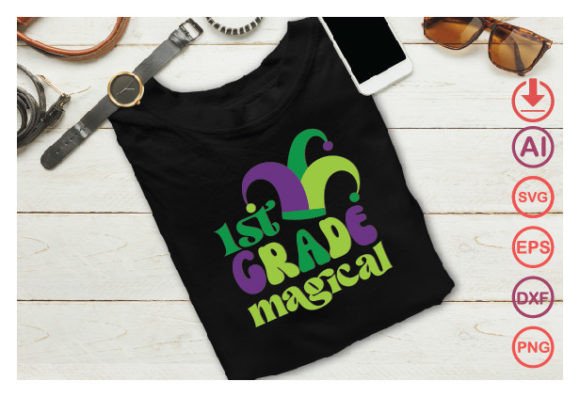
The layout feels like a gentle exhalation: soft curves, open negative space, and letterforms with just enough bounce to feel joyful—not chaotic. The “1st” is bold but not aggressive; the “Grade” sits cleanly beneath; and “Magical” curls upward like a whispered promise. As a graphics file meant for embroidery adaptation (not direct stitching), its SVG and DXF formats give flexibility—but also responsibility. You’ll need to digitize it properly for your project, especially if you’re turning it into an embroidered patch or sweatshirt embroidery. It’s not plug-and-play for embroidery machines out of the box—but that’s not a flaw. It’s a signal: this design respects the craft.
Where 1st Grade Magical Truly Shines
- Personalized gifts for kids aged 5–7: Think embroidered pillow covers for first-day-of-school, tea towels for classroom helpers, or cotton aprons for little bakers. Its scale and rhythm hold up beautifully at 3.5"–4.5" wide—ideal for small hoop sizes without sacrificing clarity.
- Baby and toddler apparel: On organic cotton onesies or gauzy swaddle blankets, the clean lines translate well in satin stitch outlines and light fill stitch areas. No dense underlay needed—just good stabilizer and moderate stitch density.
- Tote bag design and boutique merchandise: Paired with a simple border or single-color thread (like heather gray on oat linen), 1st Grade Magical reads as handmade, not mass-produced. Customers notice that difference—it builds trust in your craft business.
- Holiday and milestone embroidery: Used on a holiday stocking or graduation keepsake ornament, it adds sincerity without sentimentality. It works because it doesn’t shout—it invites.
Where to Proceed With Care
This isn’t a one-size-fits-all embroidery file—and that’s part of its integrity. Here’s where attention matters:
- Stretchy or thin fabric: On lightweight jersey tees or ribbed baby caps, stabilize aggressively. The letter spacing is generous, but tiny gaps between “1st” and “Grade” can distort without proper cutaway or tear-away backing.
- Dark or textured fabric: On charcoal sweatshirts or burlap-style tea towels, avoid overly fine details in the “Magical” curl. Digitize with slightly heavier satin stitch width—or simplify the terminal flourish manually before stitching.
- Curved surfaces like caps or hats: The horizontal flow of 1st Grade Magical means it’s better suited for front panels than curved crowns. If using on a cap, reduce width by ~10% and test hoop placement on scrap first.
- Frequent-wash items: For baby clothes or kitchen towels, confirm your digitized version uses secure lock stitches at transitions and avoids long running-stitch jumps that could snag over time.
Design Judgment: What This Adds to Your Finished Product
Used well, 1st Grade Magical elevates more than just the item—it elevates perception. When a parent sees this on a hand-embroidered backpack tag or nursery wall hanging, they don’t just register “first grade.” They register care, consistency, and quiet confidence in your eye for age-resonant design. That translates directly to repeat orders, Etsy reviews that mention “so well done,” and wholesale buyers who return for cohesive collections.
It also plays nicely with brand-building. As a T-Shirt Designs asset, it’s versatile enough to pair with complementary graphics (a star, a pencil, a chalkboard icon) without visual competition. And as Graphics for digital embroidery file libraries, it holds up in printable mockups—especially when shown on light and dark fabric backgrounds side-by-side. That contrast check alone saves hours of rework later.
Practical Notes Every Embroidery Designer Should Run Through
- Test 1st Grade Magical on scrap fabric matching your final product’s weight and stretch—even if it’s just a 2"x2" swatch.
- Check thread color contrast early: try it in black thread on cream fabric, then white thread on navy. Does the shape still read clearly?
- Review stitch density in your digitizing software. Avoid overfilling the “1st”—it’s meant to anchor, not dominate.
- Confirm hoop size compatibility. At full width, it fits comfortably in a 5"x7", but push beyond that and corners may pull.
- Inspect small details—especially the curve ending “Magical.” If digitizing for applique design, ensure seam allowances are built in.
- Run black-and-white mockups before sending to production. Does it retain personality in monotone? (It does—another strength.)
- Verify licensing terms before selling finished products or bundling the file. Since this download includes SVG and DXF only—not pre-digitized embroidery files—you’re responsible for confirming commercial use rights.
Final Thought: A Design That Grows With Your Craft Business
1st Grade Magical isn’t flashy—but it’s reliable. It doesn’t chase trends; it meets real needs: teachers needing classroom decor, parents wanting meaningful back-to-school gifts, Etsy sellers building seasonal collections, and small shops curating thoughtful baby embroidery lines. It’s the kind of design that looks better after washing, reads clearly at arm’s length, and quietly signals quality to customers who know handmade when they see it.
If you’re evaluating it for your next batch of custom apparel or planning a holiday embroidery launch, treat it like a collaborator—not just a file. Digitize it with intention. Stitch it with care. And watch how often customers ask, “Where did you find that?” That’s the mark of a truly useful design asset.