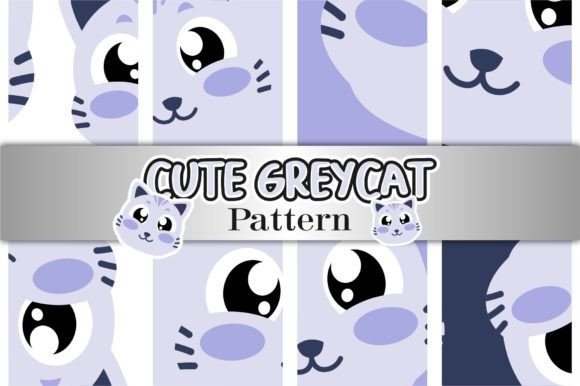
Cute Grey Cat
First Impressions: Soft, Simple, and Surprisingly Versatile
When I opened Cute Grey Cat, my first thought wasn’t “cute”—it was “calm.” There’s a quiet confidence in its silhouette: rounded ears, gentle curve of the back, eyes just detailed enough to feel expressive without demanding precision. It doesn’t shout; it invites. That’s rare in digital embroidery files that lean too hard into whimsy or clutter. As a designer who tests dozens of patterns each month for client work and small-batch production, I immediately pictured it stitched on a linen tea towel—soft grey thread on natural fabric, no flash, just warmth.
A Real-World Test: Embroidering a Nursery Pillow Cover
Last week, I used Cute Grey Cat for a custom pillow cover destined for a newborn’s nursery. The client wanted something soothing—not cartoonish, not overly stylized—and this pattern delivered. At 3.8” wide (a comfortable mid-size for most hoops), it stitched cleanly on medium-weight cotton twill with light tear-away stabilizer. No puckering. No skipped stitches. The fill stitch areas were dense but breathable—not so heavy that the fabric stiffened, and not so sparse that the shape felt unfinished. What stood out most was how well it held up in satin-stitched edges: smooth, consistent, and just subtle enough to read as handmade rather than machine-perfect.
Where It Shines (and Where It Asks for Thought)
Cute Grey Cat excels in projects where tone matters as much as technique:
- Custom apparel: Works beautifully on sweatshirts and structured tote bags—its balanced proportions prevent visual sinking into thick fabric.
- Baby embroidery: Gentle curves and minimal fine detail make it forgiving on delicate onesies and burp cloths, especially when paired with soft pastel thread colors.
- Patches and aprons: Clean outer lines translate well to heat-applied or sewn-on patches. On kitchen aprons, it reads clearly even at arm’s length.
- Holiday and gift embroidery: Paired with neutral thread (heather grey, oatmeal, charcoal), it feels timeless—not tied to a season, yet quietly festive on a holiday tea towel or baby blanket.
But—and this is important—it’s not a one-size-fits-all solution. I’d hesitate to use Cute Grey Cat on:
- Ultra-thin fabrics like silk charmeuse (without heavy cut-away stabilizer and reduced stitch density).
- Highly textured surfaces like bouclé or heavy terry cloth—the design’s subtlety can get lost in the pile.
- Curved, tight-radius items like baseball caps unless resized carefully and tested first (the ear tips may distort).
- Dark fabrics without testing contrast: light grey thread won’t pop on navy or black unless you switch to off-white or silver-grey.
What It Does for Your Craft Business
If you’re an Etsy seller, boutique owner, or craft fair vendor, Cute Grey Cat isn’t just another graphic—it’s a quiet value-builder. Customers respond to its restraint. It doesn’t compete with the product; it elevates it. A hand-stitched tote bag with this design feels intentional, not generic. A personalized baby onesie with Cute Grey Cat beside a monogram reads as thoughtful—not rushed or mass-produced.
I’ve watched buyers linger longer on listings featuring this kind of understated charm. It builds trust: the design signals care in curation, not just convenience. And because it’s scalable (works at 3”, 5”, or even 7” with clean re-digitizing), it supports multiple price tiers—small embroidered keychains vs. large wall-hanging hoops—without needing five different files.
Designer Notes You’ll Actually Use
Before stitching your first Cute Grey Cat project, try these practical checks:
- Test on scrap fabric first—especially if using stretchy knits or textured weaves. Note how the ears and tail hold shape.
- Review stitch density in your embroidery software. If it’s over 12,000 stitches, consider simplifying fill areas for lightweight garments.
- Confirm hoop size compatibility. This pattern fits comfortably in a 4×4 hoop—but double-check if your machine defaults to tighter margins.
- Inspect small details like eye highlights or whisker lines. They should be at least 0.8mm wide for reliable stitching.
- Mock it up in black and white before choosing thread. Does the shape still read clearly? If not, adjust contrast or simplify.
- Compare light and dark backgrounds using printable mockups—this helps choose thread colors that support recognition, not confusion.
- Use appropriate stabilizer: light tear-away for stable wovens, cut-away for knits, and water-soluble for delicate layers like organza overlays.
- Verify licensing terms before selling finished products or bundling Cute Grey Cat into digital embroidery kits. Since it’s listed as a Pattern and Graphic, confirm whether commercial use is included.
Final Thought: Not Just a Design—A Design Decision
Cute Grey Cat won’t dominate a room. It won’t go viral on social media for its shock value. But it will earn repeat customers. It will make your handmade product feel considered. It will sit comfortably beside a hand-poured candle, a ceramic mug, or a custom-printed card—not competing, but completing.
For embroidery designers and creative entrepreneurs, that’s the real win: choosing a pattern that works *with* your brand voice, not against it. Whether you’re stitching a single personalized gift or scaling a small shop line of nursery goods, Cute Grey Cat is the kind of design that makes the process smoother—and the result more meaningful.