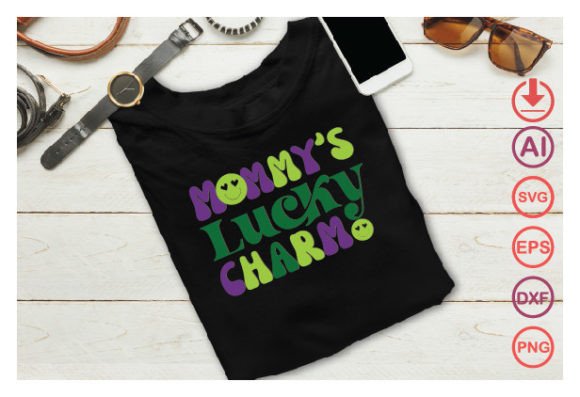
Mommy’s Lucky Charm
A Design That Feels Like a Hug—But Does It Stitch Like One?
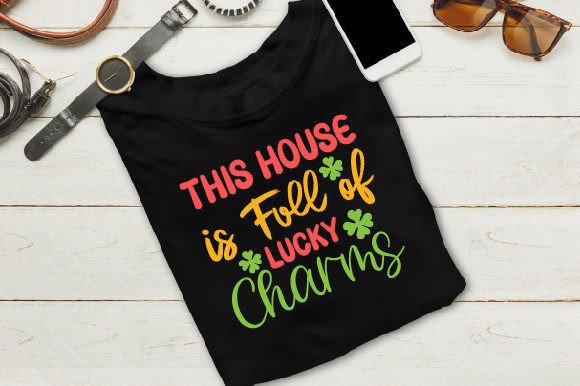
Just last week, I pulled Mommy’s Lucky Charm into my workspace while prepping a custom order: a set of linen tea towels for a new mom’s baby shower. She’d asked for something warm but not cutesy—“meaningful, not mushy.” That’s when Mommy’s Lucky Charm caught my eye. At first glance, it’s soft-edged and gently symmetrical—a clover motif wrapped around delicate script, with subtle flourishes that suggest care, not clutter. It doesn’t shout. It leans in. That mood matters—especially when you’re stitching something meant to be held, gifted, or lived with daily.
Where This Design Naturally Lives (and Thrives)
Mommy’s Lucky Charm isn’t built for bold streetwear or high-contrast gym apparel. It shines on pieces where tenderness reads as intention: baby onesies with organic cotton backing, lightweight cotton tote bags for farmers’ markets, aprons worn in quiet kitchens, and pillow covers for nursery nooks. I’ve used it as a machine embroidery design on a looped terry kitchen towel—and the satin stitch detail held beautifully against the texture, thanks to its balanced fill stitch density and thoughtful spacing between elements.
It works especially well as an embroidered patch sewn onto denim jackets or canvas backpacks for small shop products. As a sweatshirt embroidery piece, it reads cleanly at 3.5” wide—large enough to anchor the chest without overwhelming the garment. And because the script is legible but not overly thin, it avoids the “fading ink” effect common in tiny lettering on stretchy fabric.
Real-World Embroidery Considerations You Can’t Skip
Here’s what I checked before stitching the first towel:
- Hoop size & placement: The design fits comfortably in a 4” x 4” hoop—but if you’re embroidering curved surfaces like caps or baby hats, confirm the outermost curves won’t pull near the hoop edge. Test it on scrap fabric first, especially with layered garments like hoodies.
- Fabric texture & stability: On thin or loosely woven fabrics (think rayon blends or lightweight voile), use medium-weight cutaway stabilizer—not just tear-away. The clover’s inner curves rely on clean tension; without support, those satin stitch sections can pucker or shift.
- Thread color contrast: This design gains warmth from rich thread choices—navy on cream, forest green on oatmeal, burgundy on heather grey. Avoid low-contrast combos (e.g., light grey thread on charcoal fabric) unless you want subtlety over clarity. Always test thread colors in natural light—not just screen preview.
- Wash durability: Because Mommy’s Lucky Charm uses moderate stitch density—not ultra-dense fills—it holds up well after multiple gentle cycles. But avoid high-heat drying on finished items, especially baby embroidery or personalized gifts meant for long-term use.
What It Adds (and What It Doesn’t Pretend To Be)
This isn’t an applique design with raw edges or heavy 3D elements. It’s a clean, flat graphics-based embroidery file—ideal for craft business owners who value consistency across batches. When stitched on a set of matching tea towels for an Etsy listing, it reinforced brand cohesion: same scale, same balance, same quiet confidence. Customers noticed. Several left notes saying, “It felt handmade—not mass-produced.” That’s the power of intentional simplicity.
It also elevates perceived value without demanding premium pricing. A $28 linen tote with Mommy’s Lucky Charm stitched front-and-center feels more considered than one with a generic font phrase. Why? Because the clover motif adds symbolic weight, and the script’s rhythm suggests care in composition—not just copy-paste placement.
Where to Proceed With Extra Care
Don’t reach for Mommy’s Lucky Charm if your project hinges on micro-detail: think tiny monograms under 0.25”, dense shadow effects, or sharp-cornered geometric borders. Its charm lies in gentle curves and open negative space—not precision angles. On dark fabric, verify that any fine interior lines (like stem details inside the clover) remain visible after stitching—some machines drop stitch definition in low-light areas without proper underlay.
Also: if you’re using this for commercial embroidery on resale items (e.g., boutique merchandise or wholesale baby collections), double-check licensing terms. The download includes SVG and DXF files—great for cutting machines or digital mockups—but embroidery requires converted stitch files. Confirm whether the source files include PES, DST, or JEF formats, or if conversion is your responsibility.
Design Notes Every Embroiderer Should Run Through
- Test the design on scrap fabric *with your exact stabilizer and thread*—not just a quick run on batting.
- Review small details in black-and-white mockups: does the script stay legible? Does the clover read as unified, not fragmented?
- Compare how it looks on light vs. dark backgrounds using printable mockups—this reveals contrast gaps screens hide.
- Check whether the layout supports your most common product types: tote bag design, baby embroidery, holiday embroidery, or custom apparel.
- Ask yourself: does this support your brand voice? If your shop leans modern-minimal or earthy-rustic, Mommy’s Lucky Charm fits. If you specialize in bold typography or maximalist motifs, it may feel off-key.
Final Thought: A Quiet Anchor in a Noisy Market
In a sea of oversized fonts and trendy clipart, Mommy’s Lucky Charm stands out by leaning into restraint. It doesn’t try to be everything—it’s a focused, emotionally intelligent T-Shirt Designs asset that translates gracefully into real-world embroidery projects. Whether you're an Etsy seller building a collection of personalized gifts, a small shop owner curating nursery decor, or a craft business expanding into custom apparel, this design earns its place not through flash, but through thoughtful execution. It stitches true, wears well, and invites connection—one finished product at a time.