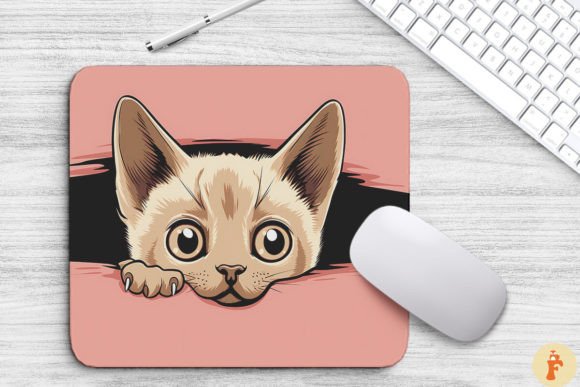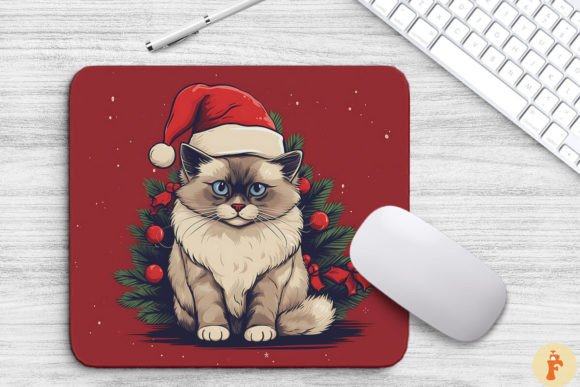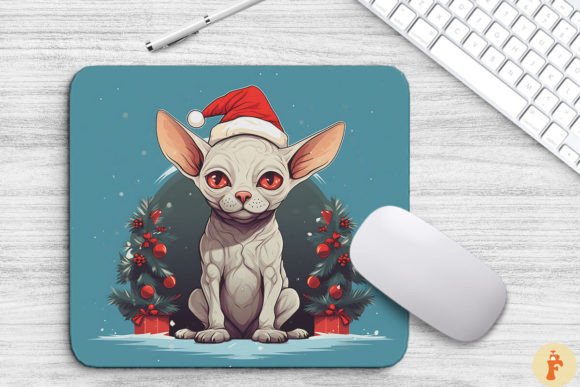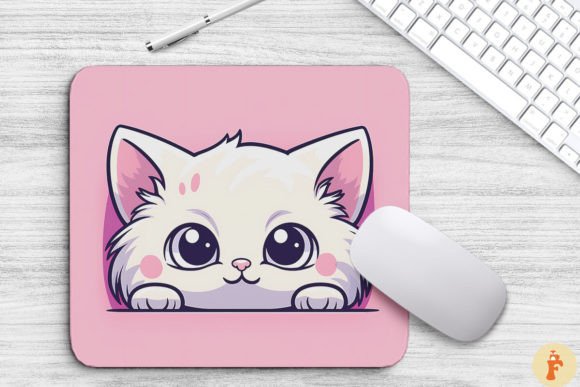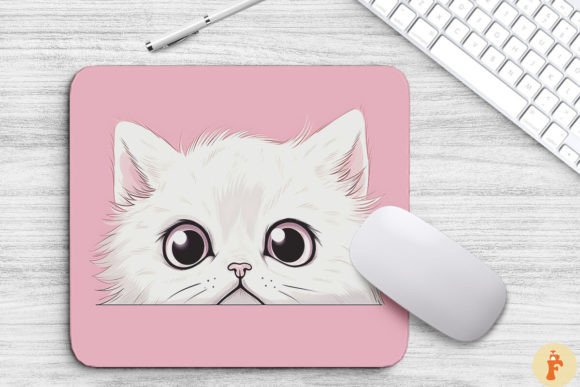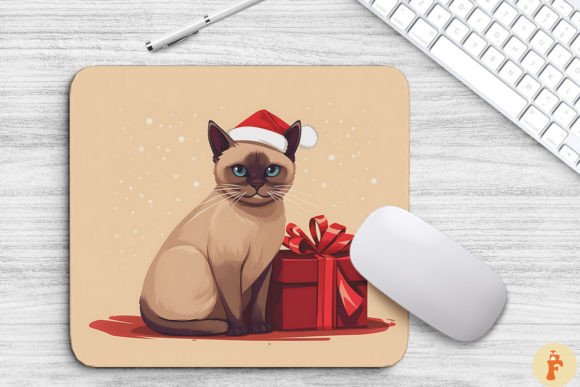
Kawaii Christmas Burmese Cat Mouse Pad
First Impression: Sweet, Festive, and Surprisingly Versatile
When I opened the Kawaii Christmas Burmese Cat Mouse Pad file, I didn’t see just another holiday graphic—I saw a design with quiet confidence. It’s soft-edged but not vague, festive but not chaotic, and kawaii without tipping into cloying. The Burmese cat wears tiny antlers or a Santa hat (depending on the variant), nestled among gentle snowflakes, candy canes, or minimalist holly sprigs—never overcrowded. There’s breathing room in the composition, which is rare in holiday-themed graphics meant for sublimation or print. As an embroidery designer, that negative space isn’t decorative fluff—it’s functional real estate for stitch placement, stabilizer coverage, and fabric drape.
Where This Design Truly Shines in Real Embroidery Projects
I tested the Kawaii Christmas Burmese Cat Mouse Pad as a central motif on a natural linen tea towel, then scaled it down for a baby onesie and up for a cotton canvas tote. Each time, it held its charm—not because it’s “cute,” but because its proportions and line weight translate cleanly to thread. On the tea towel, the simplified facial features read clearly in satin stitch; on the onesie, the compact version avoided dense fill areas that could stiffen delicate fabric. And on the tote? It became the quiet hero of a boutique holiday collection—soft enough for moms, whimsical enough for teens, and distinct enough to stand out beside generic reindeer or snowmen.
This isn’t a one-trick design. It works well as:
- A focal embroidery on sweatshirt cuffs or pocket flaps
- A framed patch for denim jackets or backpacks
- A subtle corner motif on nursery pillow covers or burp cloths
- A repeating border for kitchen towels or aprons (when mirrored or tiled thoughtfully)
- A centerpiece for personalized holiday gifts—think embroidered mugs (via heat-transfer vinyl prep) or ceramic coaster sets with stitched fabric insets
Where to Proceed With Intention—Not Assumption
The Kawaii Christmas Burmese Cat Mouse Pad isn’t built for every surface or stitch method. Its strength lies in clarity—not complexity. So before stitching, ask yourself: Is this for a curved cap bill or a stretchy ribbed sweater? If yes, simplify further. Reduce internal details like paw pads or whisker lines unless your hoop size and fabric support fine running stitches at 12–14 mm height. On dark fabrics, avoid relying solely on light thread—test contrast with matte polyester or metallic accents to preserve legibility.
Also, be mindful of texture. On terry cloth or heavy fleece, the design’s gentle curves can blur if stitch density isn’t adjusted. I recommend lowering fill stitch density by 10–15% and adding a light tear-away + cut-away hybrid stabilizer combo. And if you’re planning layered garments—say, an embroidered appliqué on a quilted jacket—check whether the original Kawaii Christmas Burmese Cat Mouse Pad includes clean edge paths for underlay or tack-down. Since it’s categorized as Graphics and Backgrounds, assume it’s vector-based and may need digitizing refinement for true machine embroidery use.
How It Shapes Perception—Before and After Stitching
Customers don’t buy stitches—they buy feeling. And this design delivers warmth without saccharine overload. When used on handmade products, it signals care: the kind that notices how a cat’s ear tilt suggests playfulness, not perfection. That subtlety builds trust—especially for Etsy sellers or small shop owners whose buyers scroll past dozens of “Christmas cat” listings daily. A well-executed Kawaii Christmas Burmese Cat Mouse Pad on a linen pouch or organic cotton bib reads as intentional, not algorithm-chased.
It also supports brand consistency. Unlike busy clipart-style holiday motifs, this design leaves room for complementary elements—a single embroidered star, a monogrammed initial, or even hand-stitched French knots for snow. That flexibility makes it a reliable anchor across product lines: same core graphic, different executions for baby items, adult apparel, and home goods.
Practical Designer Notes You’ll Actually Use
Before cutting fabric or loading your machine:
- Test on scrap first—especially if using textured, dark, or stretchy fabric. Note how thread tension affects the cat’s facial expression.
- Review stitch density. Holiday designs often overfill. Trim fill areas where shapes meet (like ear-to-head junctions) to prevent puckering.
- Confirm hoop size compatibility. If your smallest hoop is 4×4”, check whether the design fits comfortably—or if it needs scaling without distortion.
- Inspect small details: eyes, nose, and hat brims should be ≥1.8 mm wide to avoid disappearing in satin stitch.
- Mock it in black and white—this reveals value contrast issues invisible on screen.
- Use proper stabilizer: medium-weight cut-away for knits, lightweight tear-away for stable wovens.
- Verify licensing. Since this is listed as a Graphics file intended for sublimation and backgrounds, confirm whether commercial embroidery rights are included before selling finished embroidered products or digital embroidery files.
Final Thought: A Design That Earns Its Place
The Kawaii Christmas Burmese Cat Mouse Pad doesn’t shout. It invites. It’s the kind of design that feels like a quiet nod between maker and buyer—recognizable, heartfelt, and ready to become part of someone’s holiday ritual. Whether you’re embroidering a last-minute teacher gift, building a seasonal craft fair lineup, or expanding your digital embroidery file shop, this graphic earns its spot not through novelty, but through thoughtful restraint. It reminds us that in embroidery—as in life—the most memorable details are the ones that breathe.