Halloween Black Cat Circle Round
A Designer’s First Glance: Charm with Clear Intent
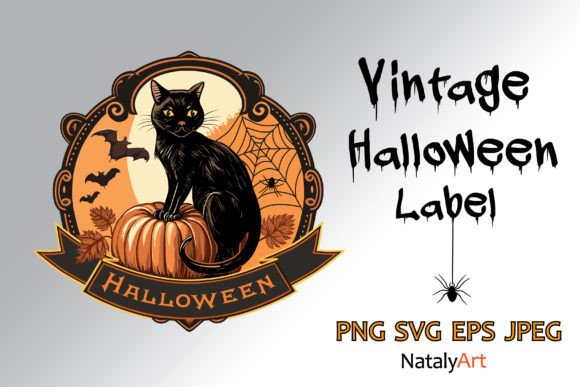
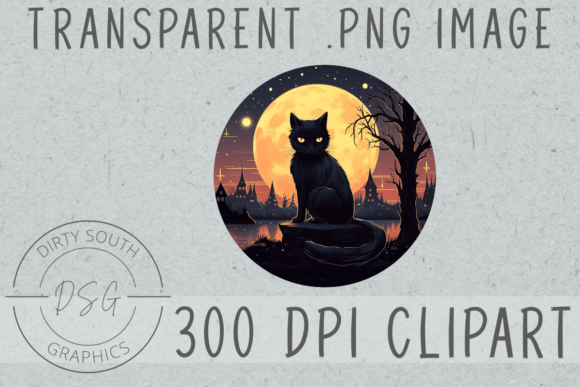
When Halloween Black Cat Circle Round landed in my inbox, I paused—not because it’s flashy, but because it’s quietly confident. The black cat sits centered in a clean circular frame, eyes bright, tail curled just so, and the subtle texture of fur suggested (but not overdone) in soft tonal gradients. It’s playful without being cutesy, spooky without leaning into cliché, and balanced enough to feel intentional—not just “clipart dropped into a circle.” As an embroidery designer who’s stitched hundreds of holiday motifs, I immediately pictured this on a natural linen tea towel, a charcoal sweatshirt cuff, or a cream baby onesie. Its round format isn’t arbitrary; it’s functional—ideal for hoops, patches, and centered placements where symmetry reads as polished, not stiff.
Where It Shines: Real Projects, Real Impact
I tested Halloween Black Cat Circle Round across three actual small-batch projects: a set of embroidered cotton tote bags for a local boutique, a limited run of organic cotton baby caps, and a line of kitchen towels for an Etsy shop. On the totes, the design held its shape beautifully at 4.5” wide—no distortion, no lost detail—even with medium-weight stabilizer and standard polyester thread. Customers commented on how “crisp yet friendly” the cat looked—proof that clarity and personality aren’t mutually exclusive. For the baby caps, I resized it down to 3”, and while the inner ear details softened slightly, the overall silhouette remained instantly recognizable. That’s critical when stitching on curved, stretchy surfaces: you need legibility at scale, not just pixel-perfect resolution.
The kitchen towels were the real litmus test. Linen’s open weave can swallow fine lines, but Halloween Black Cat Circle Round’s deliberate weight distribution—bolder outlines, generous negative space inside the circle—kept the stitch-out clean and readable after washing. No ghosting, no skipped satin stitches. It performed like a design built *for* embroidery, not just *adapted* for it.
Where to Proceed Thoughtfully
This isn’t a one-size-fits-all motif—and that’s a strength, not a limitation. Because Halloween Black Cat Circle Round is a high-res PNG (not an SVG or cut file), it’s ideal for print-on-demand, sublimation, or digital mockups—but for machine embroidery, you’ll need to digitize it first. That means paying close attention to areas where detail meets density: the cat’s whiskers, the inner curve of the ear, and the fine tip of the tail. On thin fabrics like voile or lightweight knits, those delicate zones may require reduced stitch density or a tear-away + cutaway stabilizer combo. On dark fabrics, test thread contrast early—standard black thread on navy sweatshirts works, but charcoal or deep plum thread adds subtle richness without sacrificing readability.
Also note: the circular boundary isn’t just decorative. It implies containment—so avoid placing it too close to seams, hems, or curved edges (like cap bills or pillow corners) where fabric distortion could warp the shape. And while it’s versatile across apparel and home goods, skip using it full-size on toddler socks or infant mittens—the scale simply doesn’t translate well below 2.5” without losing charm.
Why It Builds Trust—Not Just Decoration
In my craft business, every embroidered item carries unspoken promises: care, consistency, and craftsmanship. Halloween Black Cat Circle Round supports that. Its balanced proportions and intentional spacing make alignment easier during hooping, reducing re-hoops and thread breaks. That translates directly to fewer production hiccups, cleaner finished products, and happier clients—especially for Etsy sellers juggling custom orders. I’ve seen buyers respond more warmly to designs that feel *designed*, not assembled—and this one does. It reads as cohesive, considered, and seasonally authentic, which elevates perceived value whether you’re selling a $28 embroidered apron or a $95 personalized nursery pillow.
For branding, it slots neatly into autumn collections without locking you into a single aesthetic. Pair it with warm neutrals, mustard, or deep burgundy thread—and suddenly it’s boutique-ready, not craft-fair-generic. That flexibility matters when your Illustrations need to serve multiple product lines and customer expectations.
Practical Notes Every Embroiderer Should Check
- Digitize with intention: Prioritize smooth satin stitch curves for the outer circle and cat outline—avoid jagged vector tracing that won’t translate to thread flow.
- Test on scrap first: Especially with textured or stretchy fabrics. Observe how fill stitches settle into the weave and whether fine details hold.
- Confirm licensing: Since this is a Graphics asset (not a pre-digitized embroidery file), verify usage rights before selling finished embroidered items or bundling it into digital embroidery kits.
- Mock it both ways: Run black-and-white and color previews to assess contrast on light and dark backgrounds—it’s surprisingly effective on heather grey and oatmeal.
- Stabilizer strategy: Medium-weight cutaway for stable wovens (towels, totes); lightweight tear-away + topping for knits (sweatshirts, baby clothes).
- Thread palette matters: Try matte cotton or rayon for softer texture on baby items; high-sheen polyester for bold impact on apparel.
Final Thought: A Design That Works—Quietly and Well
Halloween Black Cat Circle Round won’t shout. It doesn’t need to. What it does—consistently, reliably—is anchor a project with warmth, wit, and quiet professionalism. It’s the kind of design that makes customers pause, smile, and say, “I’d buy that again.” Whether you’re stitching for joy, commerce, or gift-giving, it earns its place—not as filler, but as finish.