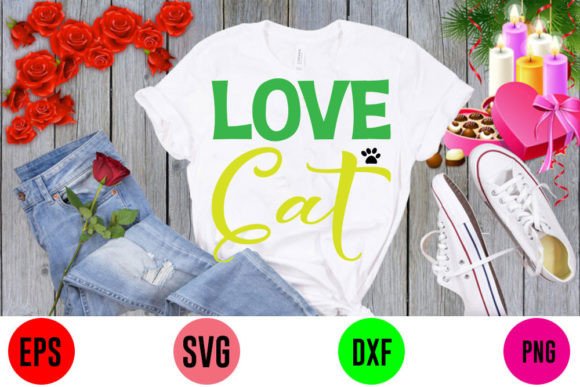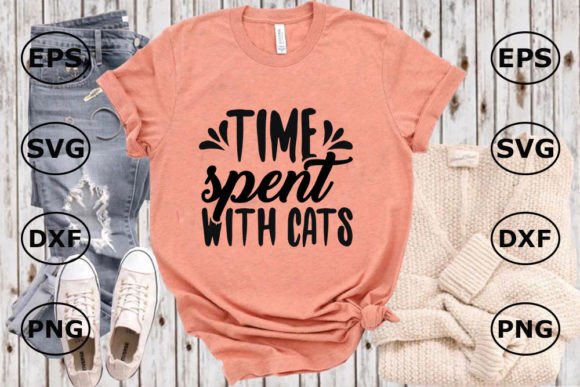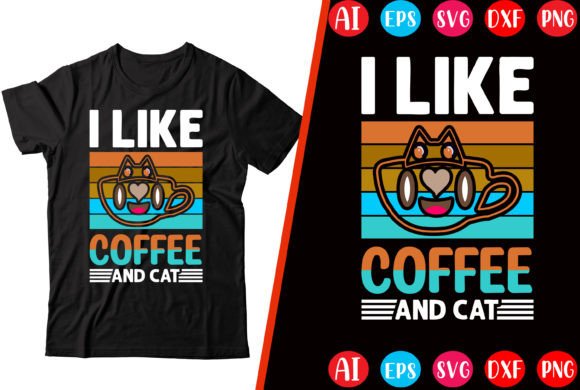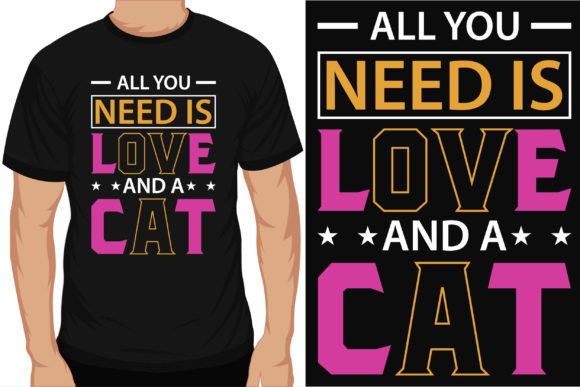
Cat T Shirt Design, I Love Cats
A Designer’s First Look: Charm Without Clutter
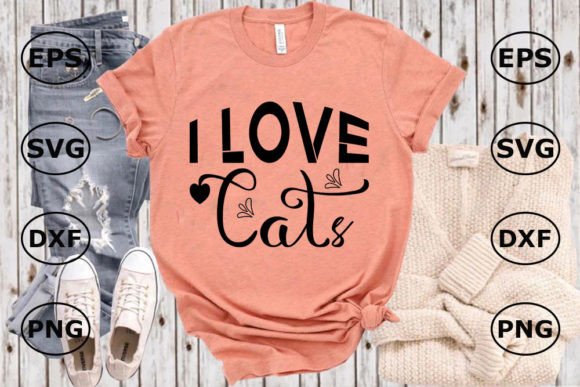
Opening Cat T Shirt Design, I Love Cats feels like unrolling a sketchbook page—friendly, intentional, and instantly legible. The composition balances a stylized cat silhouette with clean, rounded lettering that reads “I Love Cats” in a warm, approachable font. There’s no excessive ornamentation, no fussy gradients or layered shadows—just confident line work and thoughtful spacing. That simplicity is its strength. As someone who’s stitched hundreds of designs onto everything from organic cotton tees to textured linen aprons, I immediately recognized this as a design built for clarity at 3–4 inches wide—not for tiny wristbands or oversized back panels.
Real-World Test: Embroidering It on a Linen Tote Bag
Last week, I used Cat T Shirt Design, I Love Cats for a custom linen tote bag order—a boutique client wanted something cheerful but refined for their local cat café pop-up. I chose a soft navy linen blend, medium-weight stabilizer, and matte cotton thread in charcoal and cream. The result? Crisp satin-stitched outlines around the cat’s ear and tail, smooth fill stitches across the body, and readable lettering without crowding. Customers paused mid-shop to point and smile—not because it screamed “cat,” but because it felt *hand-chosen*, not mass-generated. That’s the quiet power of this design: it elevates a handmade product without demanding attention.
Where It Shines—and Where It Needs Thought
Cat T Shirt Design, I Love Cats works beautifully on:
- Medium-weight cotton t-shirts and sweatshirts (especially chest placements)
- Linen or canvas tote bags and aprons
- Lightweight baby onesies and burp cloths (when scaled to 2.5” max)
- Pillow covers and tea towels where readability matters more than fine detail
- Embroidered patches—its bold shape holds up well when cut and heat-applied
It’s less ideal for:
- Curved surfaces like baseball caps (the lettering may distort unless digitized specifically for cap hoops)
- Ultra-thin fabrics like rayon challis or silk charmeuse (stitch density could cause puckering without careful stabilizing)
- Dark, heavily textured fabrics like fleece or bouclé—test contrast first; light thread on dark fabric needs slightly increased stitch density for coverage
- Products meant for frequent machine washing (e.g., kids’ everyday tees)—verify that satin stitch edges are secure and not overly dense, which can stiffen over time
Design Integrity Meets Commercial Sense
As an embroidery designer and Etsy seller myself, I pay close attention to how a digital embroidery file shapes perception of the finished product. Cat T Shirt Design, I Love Cats reads as professional—not amateur clipart. Its balanced proportions and consistent stroke weight suggest thoughtful digitizing, not auto-trace shortcuts. That translates directly to customer trust: buyers assume care went into the making, even if they don’t know the technical details. For small shop owners bundling embroidered kitchen towels or nursery decor, this design reinforces brand warmth without sacrificing polish. It doesn’t shout—it invites. And in a crowded handmade marketplace, that kind of quiet confidence sells.
Practical Notes Every Embroiderer Should Check
Before stitching your first Cat T Shirt Design, I Love Cats project:
- Test on scrap fabric—especially if using stretchy knits or textured weaves. Note how the cat’s curved tail and lowercase “a” hold up.
- Review stitch density in your embroidery software. If you see overlapping satin columns or tight fill areas, reduce density slightly for breathability on apparel.
- Confirm hoop size compatibility. This design fits comfortably in a 4” x 4” hoop at standard scale—but double-check before loading into your machine.
- Inspect small details like the cat’s eye and the dot over the “i.” Are they clean vector paths? (The included EPS and SVG files make editing possible—if needed.)
- Try black-and-white mockups to gauge contrast on light vs. dark backgrounds. A cream-on-navy combo reads differently than white-on-black.
- Use tear-away stabilizer for stable fabrics, cut-away for knits. Skip fusible web unless you’re making iron-on patches.
- Verify licensing terms before selling finished items or reselling the digital embroidery file. The ZIP includes EPS, SVG, PNG, and DXF files—great for versatility—but commercial use rights must be confirmed with the source.
Fitting Into Your Creative Workflow
This isn’t just a T-Shirt Designs graphic—it’s a flexible Graphics asset. I’ve used the SVG version to create printable mockups for my Etsy listings, the PNG for social media previews, and the EPS for scaling into larger wall art for a pet-themed nursery collection. For craft fair sellers, it’s a low-risk, high-appeal addition to a seasonal bundle: pair it with a simple monogrammed “Cat Mom” tag or stitch it alongside paw prints on a holiday tea towel set. Its friendly tone bridges generations—equally fitting on a toddler’s bib and a grandmother’s kitchen apron.
Final Thought: Design With Intention, Not Just Output
Cat T Shirt Design, I Love Cats won’t wow with complexity—but it delivers what matters most in real embroidery work: reliability, charm, and quiet professionalism. It doesn’t ask for special treatment or expensive thread upgrades. It asks only that you choose the right fabric, stabilize thoughtfully, and place it where it’ll be seen and appreciated—not hidden under a collar or lost in a busy print. Whether you’re stitching for a client, building a craft business, or gifting something meaningful, this design earns its place by doing one thing very well: making people feel seen, smiled at, and gently understood. That’s not just good design. That’s good craftsmanship.